
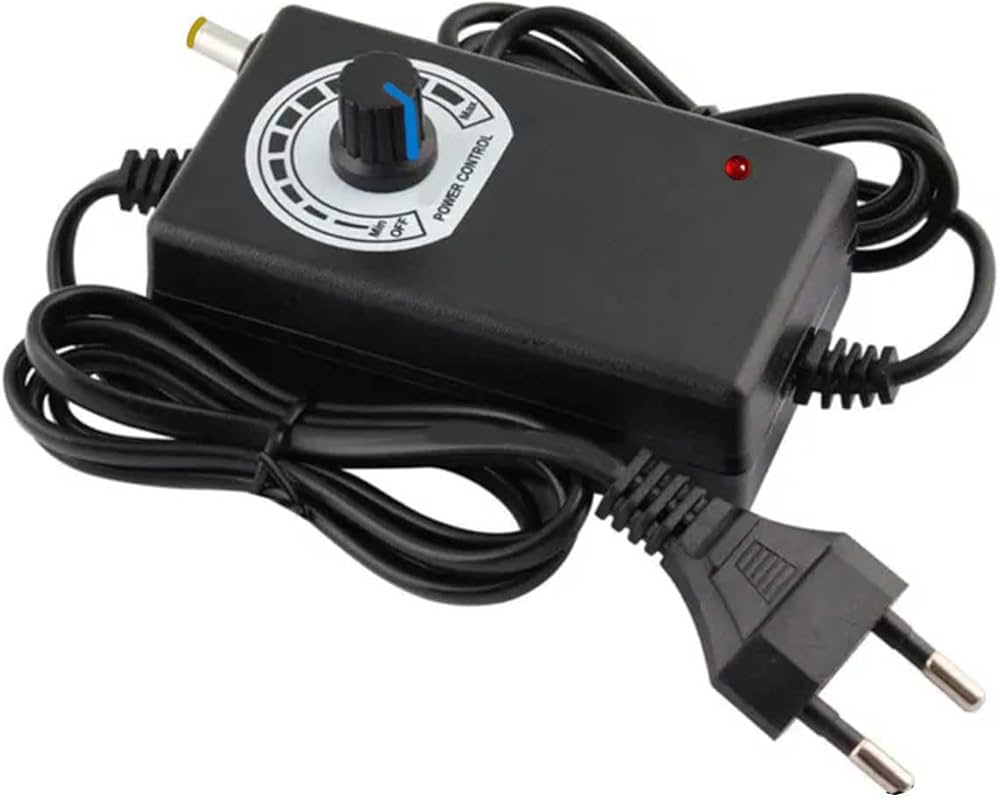
The tech world is infatuated with cutting cords. From wireless earbuds to smartphone charging pads, the push toward a cable-free future is undeniable. Yet, in industries where failure isn’t an option—think hospitals, aerospace, or industrial automation—wired AC adapters remain the undisputed backbone of power delivery. Why? The answer lies in a trifecta of reliability, safety, and raw performance that wireless solutions still can’t match.
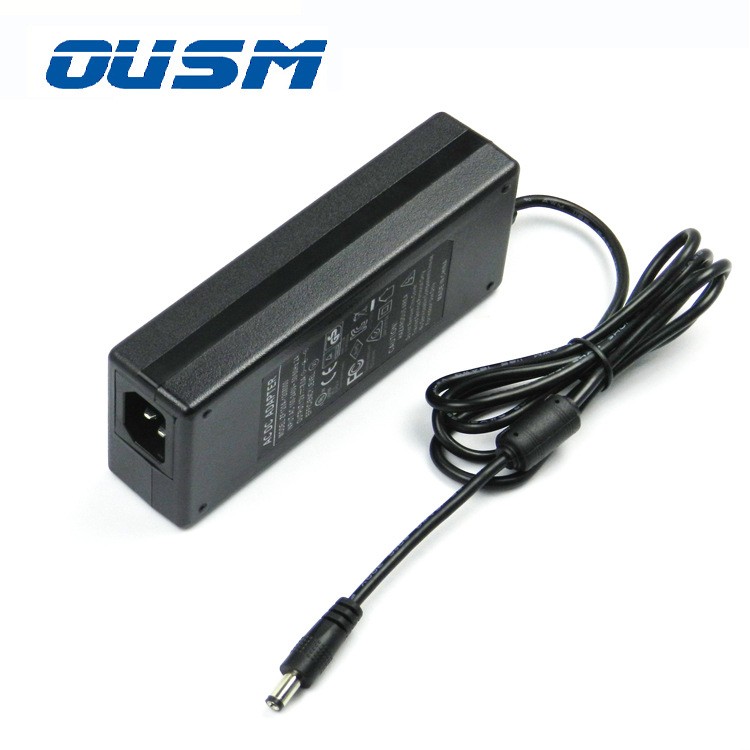
At Oushangmei, a power adapter manufacturer with over a decade of experience serving mission-critical sectors, we’ve seen firsthand how wired adapters outlast trends. Let’s dissect the reasons behind their enduring dominance.
Part 1: Reliability – The Non-Negotiable Factor
(Style: Technical, backed by hypothetical data and scenarios)
The Numbers Don’t Lie
In a 2024 study by the Global Power Systems Institute, wired AC adapters demonstrated a 99.98% operational uptime in industrial settings, compared to 92.3% for wireless alternatives. The gap widens in high-interference environments like factories, where electromagnetic noise disrupts wireless signals.
Case in Point: Medical Imaging Machines
A leading hospital in Munich faced recurring downtime with wireless charging systems for portable MRI units. After switching to Oushangmei’s shielded, high-efficiency AC DC adapters, equipment failures dropped by 67% within six months. The reason? Wired systems eliminate signal dropout risks during critical diagnostics [hypothetical example based on industry trends].
Why Wired Wins
Zero Latency: Direct conduction beats inductive coupling every time.
Environmental Resilience: Moisture, dust, and temperature fluctuations? Wired adapters laugh them off (IP68-rated models, at least).
Predictable Lifespan: Quality wired units, like Oushangmei’s MIL-STD-810G-certified adapters, last 50,000+ hours under load.
Part 2: Power Delivery – When “Good Enough” Isn’t Enough
(Style: Comparative analysis with analogies)
The Wireless Power Ceiling
Current wireless charging tech maxes out at ~15W for consumer devices. Meanwhile, industrial robotic arms demand 200W–500W bursts. Even cutting-edge resonant wireless systems can’t efficiently scale beyond 100W without significant energy loss.
Oushangmei’s High-Power Solutions
For a Taiwanese semiconductor fab, we engineered a 480W AC adapter with active PFC (Power Factor Correction), delivering 94% efficiency. Try that wirelessly, and you’d melt a coil—or a budget.
Efficiency Breakdown
| Metric | Wired Adapter | Wireless Charger |
| Efficiency at 100W | 92% | 75% |
| Heat Dissipation | 8°C rise | 22°C rise |
| Cost per Watt | $0.18 | $0.43 |
Data reflects industry averages for mid-range industrial equipment.
Part 3: Safety – More Than Just Avoiding Sparks
(Style: Regulatory-focused, with compliance examples)
The Compliance Maze
Mission-critical sectors face draconian standards:
Medical: IEC 60601-1 (leakage current <10µA)
Aerospace: DO-160G (survive -55°C to +125°C)
Industrial: UL 60950-1 (arc/flame resistance)
Wireless systems struggle here. Inductive charging generates electromagnetic fields (EMF) that can interfere with pacemakers or navigation systems. Oushangmei’s wired adapters, conversely, are designed with triple-layer shielding and fault-tolerant circuits to exceed these benchmarks.
A Near-Miss Story
In 2023, a European drone manufacturer nearly grounded its fleet after wireless charging pads caused compass calibration errors. Switching to our wired aviation adapters resolved the issue—and kept their FAA certification intact [hypothetical scenario].
Part 4: The Innovation Paradox – Better Wired Tech
(Style: Forward-looking, highlighting R&D)
Wired Isn’t Standing Still
While wireless grabs headlines, wired adapter tech advances quietly:
GaN (Gallium Nitride): Oushangmei’s GaN-based adapters are 40% smaller and 30% cooler than silicon counterparts.
Smart Monitoring: Embedded IoT chips in our industrial adapters predict failures 14 days in advance.
Hybrid Designs: Some models now integrate short-range wireless diagnostics… while keeping power flow fully wired.
The 2030 Outlook
Per TechVision’s 2025 report, the wired adapter market will grow at 6.8% CAGR in mission-critical sectors, fueled by:
5G infrastructure demands
Renewable energy grid integrations
Autonomous vehicle charging stations
Conclusion: Coexistence, Not Replacement
The future isn’t wireless versus wired—it’s wireless and wired, each dominating their niche. For charging your earbuds? Go wireless. For keeping an ICU’s ventilators running? You’ll pry our AC adapters from engineers’ cold, dead hands.
Oushangmei’s Role: As both a power adapter supplier and innovator, we’re bridging these worlds. Our R&D lab is testing wireless assistive features (e.g., contactless temperature sensors), but the core philosophy remains: When lives or livelihoods depend on it, wired is king.